Water-damage recovery is more than removing visible water. The source, affected materials, safe access and readiness to rebuild all matter. If flooding, electrical hazards or structural concerns create danger, follow emergency-authority instructions first. This guide focuses on coordinating recovery once immediate safety has been addressed.
Tell the appropriate provider when the water appeared, whether it is recurring and which rooms are affected. A plumbing leak, exterior intrusion and area flooding may call for different responses. Do not enter unsafe areas or operate wet electrical equipment. Ask who is responsible for stopping the source and who will assess the resulting damage. Those may be separate professionals, and drying alone does not resolve the original cause.
Identifying the source safely · As your scope requires
Environmental or structural specialist where warranted
Arrange this expertise independently when your scope requires it. Confirm relevant qualifications and experience before engaging a provider.
This expertise may be important for your project. This role is not an official SJBA category; consider arranging this service independently.
Your next step
Documenting the loss and claim
Keep a dated record of observations, safe photographs and communications. Ask the insurer what is needed for a policy-specific review and preserve receipts for emergency work. Do not assume all water sources are covered alike. Read mitigation authorizations and understand payment responsibility before signing where circumstances allow. Record which materials are removed and why, while following appropriate safety and disposal directions.
Confirm scope, qualifications, fees and availability directly.
Documenting the loss and claim · As your scope requires
Insurance professional
Property & Casualty Insurance
Explain policy-specific reporting and documentation questions. Coverage is policy-specific and must be confirmed directly; inclusion here does not confirm protection.
Bring the source-repair provider, restoration team and remodeler into a clear handoff. Identify any unresolved exterior, plumbing or other issue before closing walls or replacing finishes. Check required approvals for the reconstruction scope. Compare repair estimates using the same description of damage and completed mitigation. If claim representation is being considered, review that professional’s role and contract separately from the repair contract.
Explain policy-specific reporting and documentation questions. Coverage is policy-specific and must be confirmed directly; inclusion here does not confirm protection.
Arrange this expertise independently when your scope requires it. Confirm relevant qualifications and experience before engaging a provider.
This expertise may be important for your project. This role is not an official SJBA category; consider arranging this service independently.
Stage 01–05 · As your scope requires
Environmental or structural specialist where warranted
Arrange this expertise independently when your scope requires it. Confirm relevant qualifications and experience before engaging a provider.
This expertise may be important for your project. This role is not an official SJBA category; consider arranging this service independently.
Water-damage recovery is more than removing visible water. The source, affected materials, safe access and readiness to rebuild all matter. If flooding, electrical hazards or structural concerns create danger, follow emergency-authority instructions first. This guide focuses on coordinating recovery once immediate safety has been addressed.
01 · Identify the source and boundaries of the problem
Tell the appropriate provider when the water appeared, whether it is recurring and which rooms are affected. A plumbing leak, exterior intrusion and area flooding may call for different responses. Do not enter unsafe areas or operate wet electrical equipment. Ask who is responsible for stopping the source and who will assess the resulting damage. Those may be separate professionals, and drying alone does not resolve the original cause.
02 · Document and contact the relevant insurer
Keep a dated record of observations, safe photographs and communications. Ask the insurer what is needed for a policy-specific review and preserve receipts for emergency work. Do not assume all water sources are covered alike. Read mitigation authorizations and understand payment responsibility before signing where circumstances allow. Record which materials are removed and why, while following appropriate safety and disposal directions.
03 · Agree on assessment and recovery milestones
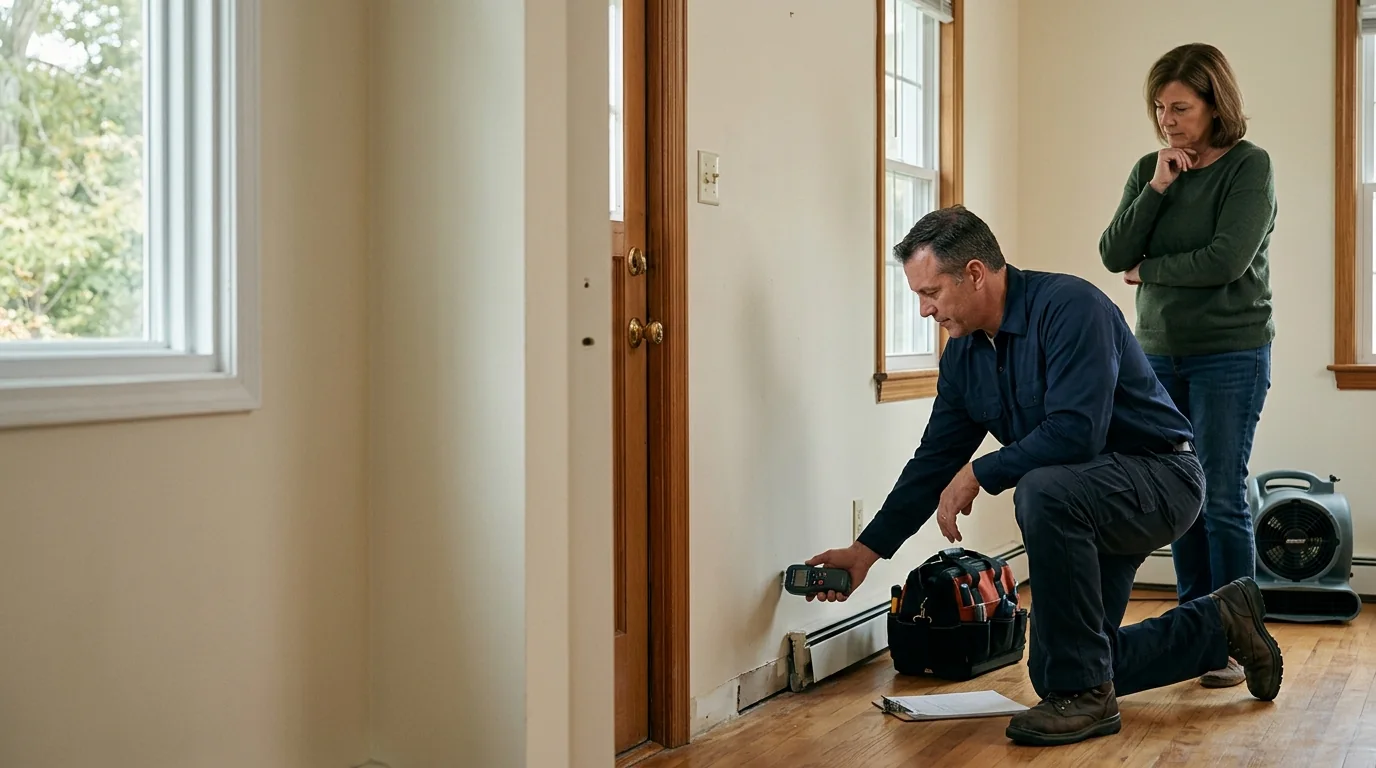
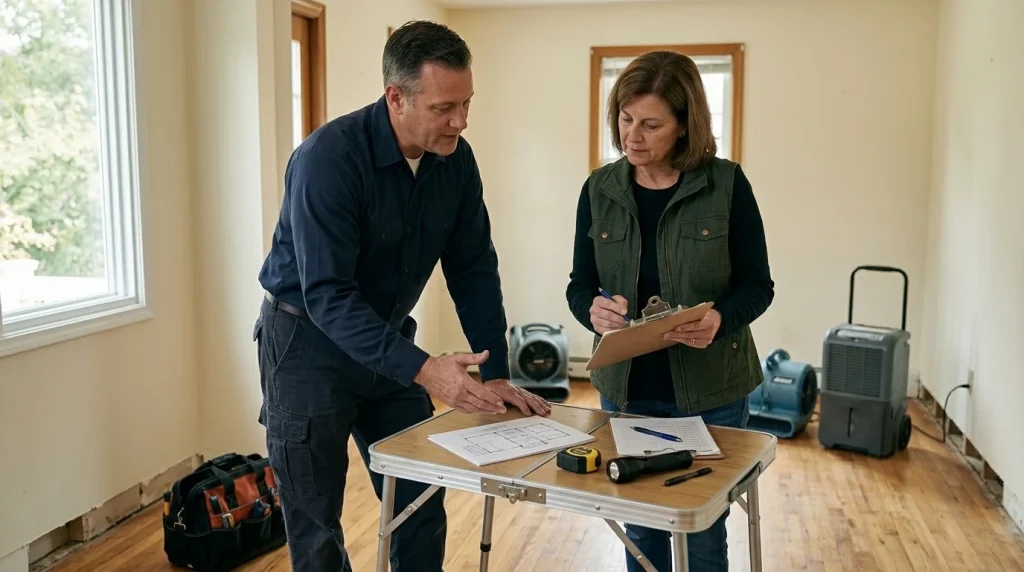
Ask the restoration provider to explain affected areas, recommended work and how progress will be documented. Clarify whether suspected contamination or mold requires additional expertise. Keep occupants away from restricted work areas and establish access arrangements. A surface that looks dry does not, by itself, settle the condition of concealed materials. Ask what evidence will support moving from mitigation to repair and who makes that determination.
Generated illustration.
04 · Repair the cause before rebuilding
Bring the source-repair provider, restoration team and remodeler into a clear handoff. Identify any unresolved exterior, plumbing or other issue before closing walls or replacing finishes. Check required approvals for the reconstruction scope. Compare repair estimates using the same description of damage and completed mitigation. If claim representation is being considered, review that professional’s role and contract separately from the repair contract.
05 · Close the record and monitor the area
Collect work records, invoices and instructions for follow-up. Note what conditions should prompt another call, particularly if the original symptom returns. Check that unfinished items and any required inspections are resolved. Keep claim documents separate from maintenance records but cross-reference them. Discuss preventive work as a distinct decision, supported by the relevant professional, rather than assuming every proposed improvement is part of covered restoration.
Where plans can go off track
Rebuilding too early can conceal an unresolved problem. Another risk is assuming the same company is responsible for the leak, drying, claim and reconstruction. Put those responsibilities in writing. Do not use a visual check or lack of odor as the sole basis for concluding recovery is complete.
Questions before your next conversation
Has the source been resolved, and who confirms that?
What evidence establishes readiness for reconstruction?
Which costs and documents need insurer review?
Who handles a recurrence after work is complete?
Make your next step specific
Bring a short description of your situation, the decisions already made, your timing and any documents relevant to the questions above. Ask each professional to identify what they can handle, what needs another specialist, and which decision must come first. Agree the scope and fees before authorizing work.
Depending on your circumstances, your team may also need Plumber or other source-repair specialist, Environmental or structural specialist where warranted. These roles are included for planning completeness; an SJBA connection is not represented for them here.
Official resources for the details
Use these sources to check requirements relevant to your situation. Municipal approvals, provider scope and individual legal, tax or coverage decisions require direct verification.
Keep source findings, recovery records and household needs together after immediate safety is addressed. Track professional handoffs and the evidence needed before rebuilding.