Do not enter a flooded basement if electrical, structural or contamination hazards may be present. Contact emergency services for immediate danger and follow utility or authority instructions. The first task is a safe response, not retrieving possessions or starting cleanup. Once access is cleared, coordinate the source, damage record and recovery.
Keep children, pets and unnecessary visitors out of the affected area. Do not touch electrical equipment while wet or standing in water. Use the relevant emergency or utility contact when there is danger, and have qualified professionals determine what can be accessed or operated. CDC guidance identifies electrical and contamination hazards when reentering flooded buildings. Do not assume a shallow or clear-looking pool of water is harmless.
Confirm scope, qualifications, fees and availability directly.
People and safe access · As your scope requires
Emergency authorities or utility responders
Arrange this expertise independently when your scope requires it. Confirm relevant qualifications and experience before engaging a provider.
This expertise may be important for your project. This role is not an official SJBA category; consider arranging this service independently.
Your next step
Source and loss documentation
Contact the insurer for instructions relevant to your policy and the apparent source of water. Keep receipts, communications and authorizations together. Ask providers to describe the immediate scope and payment responsibility. Do not assume all flooding is covered under ordinary property insurance. Preserve appropriate documentation without delaying necessary safety action, and follow professional instructions about handling or disposing of damaged materials.
Confirm scope, qualifications, fees and availability directly.
Source and loss documentation · As your scope requires
Insurance professional
Property & Casualty Insurance
Explain policy-specific reporting and documentation. Coverage is policy-specific and must be confirmed directly; inclusion here does not confirm protection.
Source and loss documentation · As your scope requires
Plumber or drainage specialist
Arrange this expertise independently when your scope requires it. Confirm relevant qualifications and experience before engaging a provider.
This expertise may be important for your project. This role is not an official SJBA category; consider arranging this service independently.
Your next step
Assessment before finishing repairs
Ask the recovery team how affected materials and equipment will be assessed and how progress will be recorded. Have the electrician and HVAC professional evaluate affected systems before they are used again. If contamination or mold is suspected, obtain appropriate specialist guidance. The basement looking cleaner does not establish that concealed areas or equipment are ready for normal use.
Explain policy-specific reporting and documentation. Coverage is policy-specific and must be confirmed directly; inclusion here does not confirm protection.
Arrange this expertise independently when your scope requires it. Confirm relevant qualifications and experience before engaging a provider.
This expertise may be important for your project. This role is not an official SJBA category; consider arranging this service independently.
Stage 01–05 · As your scope requires
Plumber or drainage specialist
Arrange this expertise independently when your scope requires it. Confirm relevant qualifications and experience before engaging a provider.
This expertise may be important for your project. This role is not an official SJBA category; consider arranging this service independently.
Do not enter a flooded basement if electrical, structural or contamination hazards may be present. Contact emergency services for immediate danger and follow utility or authority instructions. The first task is a safe response, not retrieving possessions or starting cleanup. Once access is cleared, coordinate the source, damage record and recovery.
01 · Keep people away and obtain appropriate help
Keep children, pets and unnecessary visitors out of the affected area. Do not touch electrical equipment while wet or standing in water. Use the relevant emergency or utility contact when there is danger, and have qualified professionals determine what can be accessed or operated. CDC guidance identifies electrical and contamination hazards when reentering flooded buildings. Do not assume a shallow or clear-looking pool of water is harmless.
02 · Describe what happened from a safe location
Record when the water was noticed and any known weather, plumbing or equipment event. Take photographs only where safe. Contact the appropriate source-repair or restoration professional and tell them about suspected sewage, electrical equipment or structural concerns. Avoid diagnosing the cause from appearance alone. Source control and water-damage recovery may involve different specialists, so clarify who is handling each part.
03 · Start the claim and work record
Contact the insurer for instructions relevant to your policy and the apparent source of water. Keep receipts, communications and authorizations together. Ask providers to describe the immediate scope and payment responsibility. Do not assume all flooding is covered under ordinary property insurance. Preserve appropriate documentation without delaying necessary safety action, and follow professional instructions about handling or disposing of damaged materials.
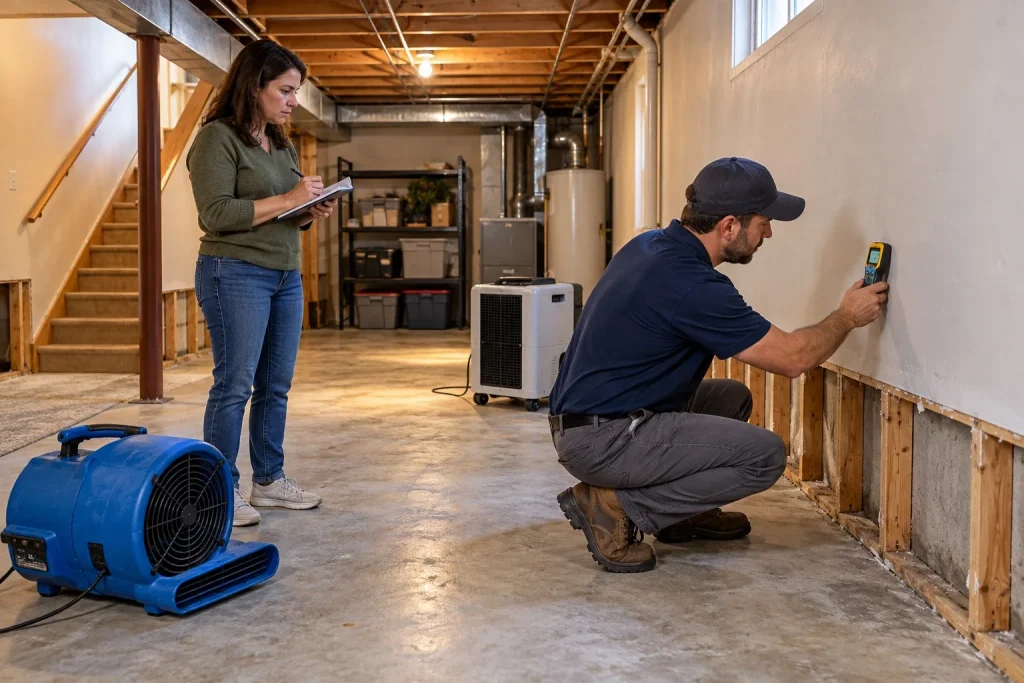
Generated illustration.
04 · Move from cleanup to a documented assessment
Ask the recovery team how affected materials and equipment will be assessed and how progress will be recorded. Have the electrician and HVAC professional evaluate affected systems before they are used again. If contamination or mold is suspected, obtain appropriate specialist guidance. The basement looking cleaner does not establish that concealed areas or equipment are ready for normal use.
05 · Delay finishes until the cause and readiness are clear
Coordinate source repairs and restoration findings before rebuilding. Ask what evidence supports closing walls or replacing flooring and who confirms it. Keep a record of unresolved issues and future preventive work to evaluate. Once the immediate recovery is complete, use the broader water-damage guide to plan repairs. Do not treat this first-response checklist as a do-it-yourself pumping, electrical or remediation procedure.
Where plans can go off track
The common urge to rescue stored items can expose someone to hazards. Another mistake is turning on equipment to see whether it still works. Let qualified responders establish safe access and system use, then document the sequence from source control to reconstruction.
Questions before your next conversation
Has safe access been established by the appropriate professional or authority?
Who is addressing the source and who is handling damage?
What equipment must be assessed before reuse?
What confirms readiness to rebuild?
Make your next step specific
Bring a short description of your situation, the decisions already made, your timing and any documents relevant to the questions above. Ask each professional to identify what they can handle, what needs another specialist, and which decision must come first. Agree the scope and fees before authorizing work.
Depending on your circumstances, your team may also need Emergency authorities or utility responders, Plumber or drainage specialist. These roles are included for planning completeness; an SJBA connection is not represented for them here.
Official resources for the details
Use these sources to check requirements relevant to your situation. Municipal approvals, provider scope and individual legal, tax or coverage decisions require direct verification.