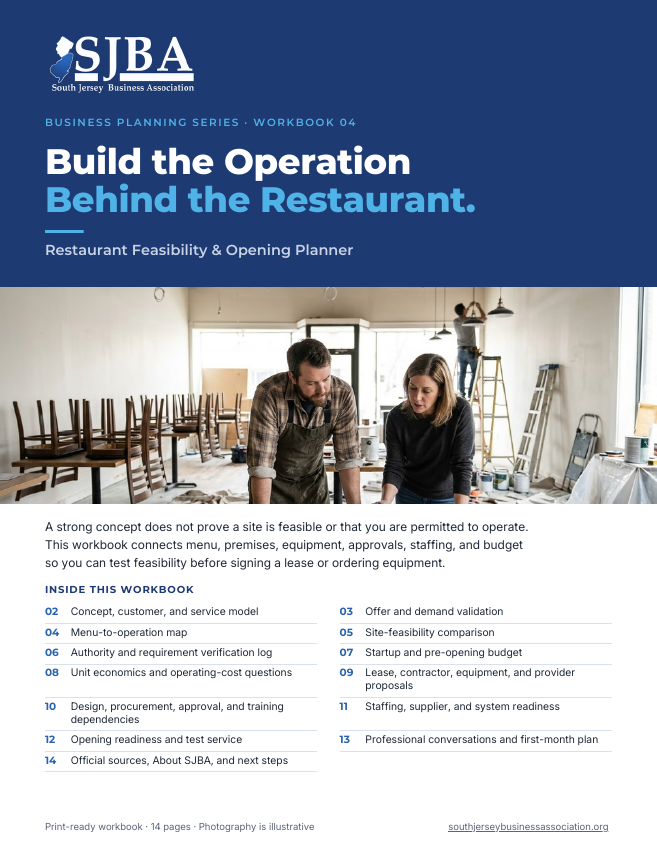
A restaurant opening connects a food concept to a regulated physical operation. Menu, equipment, premises, staffing and service must work together. Start with feasibility and the customer experience, then verify the site and operating requirements before a lease or equipment order makes the plan difficult to change.
01 · Test the concept and service model
Describe the customer, menu, price range and service format. Consider how orders will be prepared, delivered and paid for during a busy period. Test assumptions about demand through appropriate lawful methods. Ask what makes the concept operationally different from an existing restaurant you admire. The goal is evidence about a workable offer, not simply enthusiasm for food or a visually appealing dining room.
02 · Model startup and operating cash
With an accountant, estimate startup spending and recurring costs using actual quotes where possible. Include professional advice, fit-out, equipment, inventory, staffing and working capital. Model a slower opening and a period below expected sales. Discuss financing against that plan. Avoid spending the available funds on construction while leaving too little to operate, train staff and respond to early problems.
03 · Verify the premises and approvals
Use Business.NJ.gov’s restaurant guidance and the relevant local authorities to identify requirements for the actual concept. Have specialists assess equipment, mechanical systems, food preparation and site limitations before signing commitments. Obtain commercial legal advice on the agreement. Do not assume a former restaurant location is ready for your operation or that a prior approval automatically covers a different menu, layout or ownership arrangement.
04 · Build and rehearse the operating system
Coordinate equipment delivery, installation, inspection and staff training. Test ordering, payment, refunds and closing procedures together. Establish responsibilities for inventory, cleaning, records and customer concerns. Have appropriate specialists address employment, food-safety and coverage questions. Rehearse a limited service before making a larger public promise, subject to all required approvals. A soft opening is not an exemption from operating requirements.
05 · Open with controlled expectations
Use a capacity and service scope the team can manage. Review waste, labor, customer feedback and cash daily at first, then establish a sustainable reporting cadence. Adjust based on evidence rather than changing the entire concept after every comment. Keep supplier and equipment contacts available. Delay optional expansion until the kitchen, service and financial systems are reliably supporting the initial operation.
Where plans can go off track
The most expensive mistake can occur before construction: committing to a site that cannot support the intended operation at an affordable cost. Another is announcing a date before approvals and equipment readiness are clear. Keep the menu, premises and financial model connected.
Questions before your next conversation
- Can the site support this exact food and service concept?
- What cash remains after construction and equipment?
- Which approvals must precede operation?
- What will a rehearsal reveal before a full opening?
Make your next step specific
Bring a short description of your situation, the decisions already made, your timing and any documents relevant to the questions above. Ask each professional to identify what they can handle, what needs another specialist, and which decision must come first. Agree the scope and fees before authorizing work.
Depending on your circumstances, your team may also need Restaurant design and equipment specialists, Appropriately qualified mechanical, plumbing and electrical trades, Food-safety and local health authorities, Commercial attorney. These roles are included for planning completeness; an SJBA connection is not represented for them here.
Official resources for the details
Use these sources to check requirements relevant to your situation. Municipal approvals, provider scope and individual legal, tax or coverage decisions require direct verification.