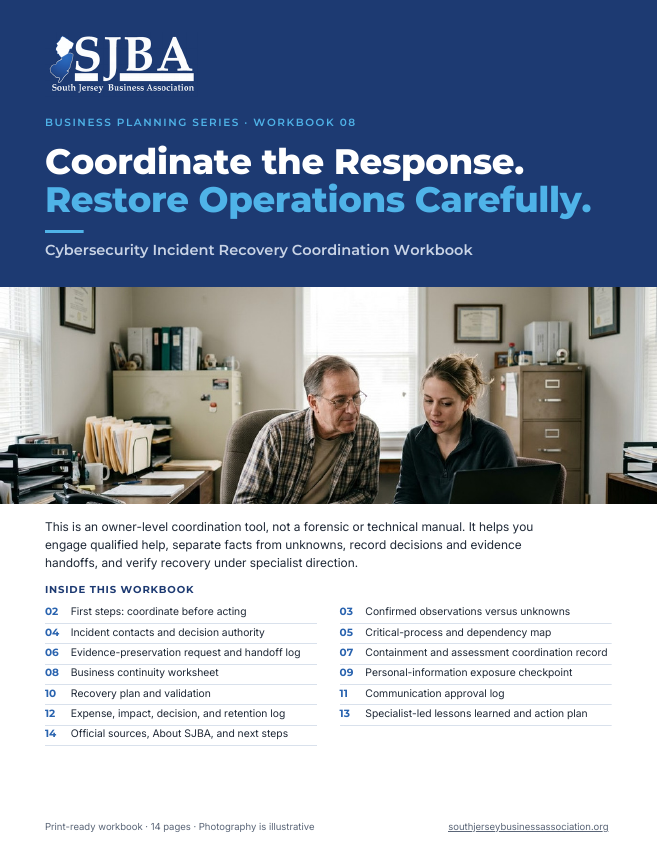
A cybersecurity incident can interrupt systems without immediately revealing whether personal information was exposed. The first priorities are a coordinated response, evidence preservation and appropriate expert help. This guide focuses on operational recovery; a confirmed or suspected data breach also requires a separate legal and notification assessment.
01 · Activate a trusted response channel
Contact the designated IT or incident-response provider using a communication method believed to be safe. If ordinary systems may be compromised, follow the response team’s guidance on alternatives. Identify who can authorize action and who records decisions. Avoid improvising destructive repairs, deleting files or installing unverified tools. Preserve relevant evidence under specialist direction while taking appropriate steps to limit further harm.
If your business is dealing with an active incident, contact a qualified incident-response provider first. This workbook helps you coordinate. It does not replace specialist help.
02 · Identify affected operations and obligations
List the services that are unavailable and the business functions that depend on them. Have specialists investigate scope rather than assuming the visible symptom is the entire incident. Notify the insurer through the required channel if a relevant policy may apply, and ask about response-provider requirements. Engage legal advice for contractual, privacy and reporting questions. A personal identity-protection adviser is not automatically a business incident-response specialist.
03 · Plan continuity without spreading the problem
Decide which work can safely continue through approved alternatives. Communicate clear instructions to staff about systems and contacts to use. Verify payment or account-change requests through trusted channels, particularly during confusion. Coordinate customer-facing messages with the response and legal team. Do not claim that systems are safe or data unaffected before the investigation supports that statement.
04 · Restore in a controlled sequence
Have qualified specialists establish the conditions for recovery, validate backups and prioritize essential systems. Keep a record of what is restored and how it is checked. Reconcile business transactions that occurred through temporary processes. Avoid reconnecting everything simply because one application works. The restoration plan should address the cause and access controls, not only the immediate outage.
05 · Review lessons and remaining responsibilities
Track outstanding legal, insurance and customer obligations with the appropriate advisers. Review the response timeline, access management, backup testing and vendor responsibilities. Update the incident plan and assign follow-up work. Record business impacts without confusing estimated loss with confirmed amounts. Use the experience to improve readiness, while recognizing that no process or product guarantees immunity from future incidents.
Where plans can go off track
Uncoordinated attempts to fix systems can destroy evidence or complicate recovery. Another error is treating a working backup as proof that the cause is resolved. Keep operational recovery separate from conclusions about data exposure and notification duties.
Questions before your next conversation
- Who is leading technical response and preserving evidence?
- Which systems and business functions are affected?
- What conditions must be met before restoration?
- Does the incident require a separate data-breach assessment?
Make your next step specific
Bring a short description of your situation, the decisions already made, your timing and any documents relevant to the questions above. Ask each professional to identify what they can handle, what needs another specialist, and which decision must come first. Agree the scope and fees before authorizing work.
Depending on your circumstances, your team may also need Incident-response and digital-forensics specialist, IT service provider, Cybersecurity or privacy attorney, Relevant law-enforcement contacts. These roles are included for planning completeness; an SJBA connection is not represented for them here.
Official resources for the details
Use these sources to check requirements relevant to your situation. Municipal approvals, provider scope and individual legal, tax or coverage decisions require direct verification.